
 By SmartWriteX Editor Team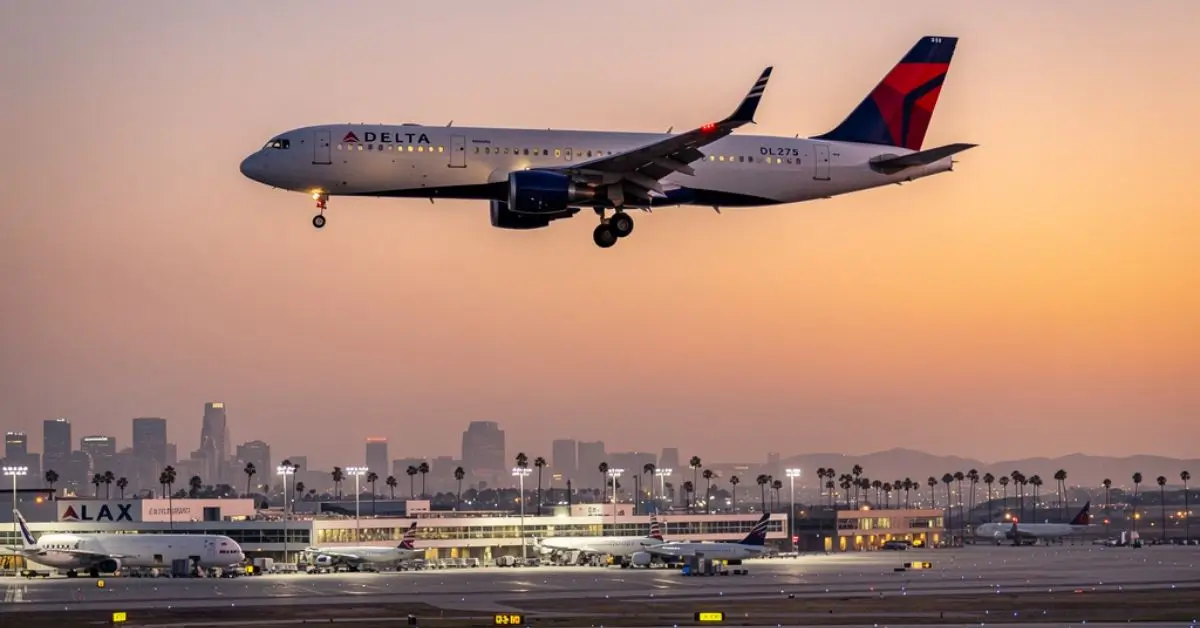
When a commercial flight gets diverted unexpectedly, it creates immediate confusion for everyone on board and for family members tracking the flight from the ground. You booked a seat to one destination, and suddenly the plane is landing somewhere else entirely. What happened? Why was the decision made? What comes next?
The diversion of Delta Flight DL275 to Los Angeles International Airport raised exactly these questions. Passengers on board and people following the flight online wanted clear answers quickly, and the information available in the immediate aftermath was scattered and incomplete.
This article covers what is publicly known about the Delta Flight DL275 LAX diversion, explains why commercial flights get diverted and how that decision is made, walks through what the process looks like for passengers on board, and covers the rights and compensation options available when a flight does not reach its scheduled destination.
Delta Flight DL275 diverted to LAX refers to the unscheduled rerouting of Delta Air Lines flight DL275 to Los Angeles International Airport rather than its originally scheduled destination. Flight diversions occur when pilots, airline operations, or air traffic control determine that continuing to the planned destination is not safe, practical, or possible due to mechanical issues, medical emergencies, weather conditions, or other operational factors.
Delta Flight DL275 was diverted to LAX due to circumstances requiring an unscheduled landing. This guide explains what likely caused the diversion, how the decision-making process works in aviation, what passengers experience during and after a diversion, and what rights and options are available when this happens.
Delta Flight DL275 operates as a long-haul international route in Delta’s network. When the diversion to Los Angeles International Airport occurred, it attracted attention from passengers, aviation watchers, and news outlets tracking the unexpected change in the flight’s path.
Based on available public information, the diversion was handled by Delta’s operations team in coordination with the flight crew. LAX was selected as the diversion airport, which is consistent with standard practice for flights operating in the Pacific region or transcontinental US routes, given LAX’s status as one of the largest and best-equipped airports in the country for handling unexpected landings.
It is important to be transparent here. The specific detailed cause of this particular diversion may not have been fully disclosed in public statements at the time of writing. Airlines are not always required to publicly state the precise reason for a diversion immediately, particularly when investigations are ongoing or when the reason involves passenger or crew medical situations that carry privacy protections.
What is clear is that a diversion of this kind involves a coordinated decision made in the interest of passenger safety, which is always the primary driver of any unscheduled landing.
Understanding why diversions happen removes much of the anxiety and confusion around them. There are several distinct categories of situations that lead a flight crew or airline operations center to redirect a plane to an alternate airport.
Medical Emergencies
Medical emergencies involving passengers or crew members are among the most common reasons for flight diversions. When someone on board requires urgent medical attention that cannot be adequately managed in the air, the captain has the authority to divert immediately to the nearest appropriate airport.
These decisions are made in consultation with onboard medical professionals if present, airline medical support services available by radio or satellite, and air traffic control. The priority is getting the affected person to ground-based medical care as quickly as possible.
Mechanical Issues
When an aircraft experiences a mechanical problem during flight, the flight crew assesses the severity and determines whether continuing to the original destination is safe, practical, or advisable. Many mechanical issues can be monitored and managed safely to the original destination. Others require an immediate or precautionary landing at the nearest suitable airport.
Even when a mechanical issue is not immediately dangerous, pilots and airlines follow conservative protocols. Landing early to have the aircraft inspected by maintenance engineers is always preferable to continuing with any unresolved uncertainty.
Weather Conditions
Severe weather at the destination airport or along the flight path can make landing there unsafe or impossible. This includes thunderstorms, dense fog below visibility minimums, icing conditions, and extreme crosswinds beyond the aircraft’s certified limits.
In these situations, the flight may divert to a nearby alternate airport where conditions are acceptable, wait for conditions at the original destination to improve, or return to the departure airport if the situation warrants it.
Security Concerns
Occasionally, security-related situations on board or at the destination airport require a diversion. These are handled with the highest level of coordination between the flight crew, airline security, and law enforcement on the ground. Specific details in these cases are often not disclosed publicly for security reasons.
Operational and Air Traffic Control Factors
Air traffic control occasionally directs aircraft to alternate airports due to congestion, runway closures, airport emergencies affecting the destination, or other operational factors that make the scheduled landing impractical.
The decision to divert a commercial flight is never made casually. It involves multiple layers of judgment, communication, and protocol.
The captain of the aircraft holds final authority over the safety of the flight. This is a legal and regulatory reality in aviation. No one on the ground, not airline management, not air traffic control, can override the captain’s safety decision once made.
In practice, the captain works closely with the first officer, consults with Delta’s System Operations Control center on the ground via satellite communication, coordinates with air traffic control for routing and clearance to the alternate airport, and receives real-time data on conditions at potential diversion airports.
This process can unfold in minutes for emergencies or over longer periods for developing situations. The fact that it happens smoothly in the vast majority of cases reflects the quality of training commercial pilots receive and the robust systems airlines have in place for exactly these situations.
LAX is a logical diversion choice for many Pacific-routed or transcontinental flights because of its size, its 24-hour operational status, its extensive maintenance and medical facilities, and its capacity to handle large wide-body aircraft.
For passengers on board, a diversion is disorienting regardless of how smoothly it is handled. Understanding the typical sequence of events helps.
The captain usually makes an announcement explaining that the flight will be landing at an alternate airport. The level of detail shared depends on the nature of the situation. Medical diversions typically involve a brief, general explanation to protect the privacy of the affected individual.
Passengers are asked to return to their seats, fasten seatbelts, and follow standard landing procedures. The landing itself at the diversion airport is handled exactly like any other landing.
After landing, the situation depends entirely on the reason for the diversion. In a medical emergency diversion, emergency services may board the aircraft to assist the affected passenger while other passengers remain seated temporarily. In a mechanical diversion, the aircraft is taken to a gate or holding area and passengers are deplaned.
From that point, the airline’s ground team takes over. Passengers are typically given updates on what happens next, including whether the original flight will continue, whether a new aircraft is being arranged, or whether passengers need to be rebooked on alternative routes.
This is the section most passengers actually need when a diversion happens to them. The rights and entitlements vary depending on the nature of the diversion, the airline’s policies, and whether the cause was within the airline’s control.
What Delta typically provides during a diversion:
Meals and refreshments during extended ground delays are standard practice for most major US carriers including Delta. Hotel accommodation when an overnight stay becomes necessary is also typically provided when the diversion is caused by factors within the airline’s control.
Transportation to the final destination is always the airline’s responsibility to arrange, whether through rebooking on the next available Delta flight, a partner airline, or other means.
What US regulations cover:
The US Department of Transportation requires airlines to provide certain minimum standards of care during extended tarmac delays. If passengers are held on the aircraft at the diversion airport for more than three hours domestically or four hours internationally, the airline must provide food, water, and working restrooms, and must allow passengers to deplane if they request it.
EU regulations for relevant routes:
For passengers on routes covered by EU Regulation 261/2004, which applies to flights departing EU airports regardless of airline, compensation requirements are more specific. However, diversions caused by extraordinary circumstances like severe weather or genuine security threats may exempt airlines from financial compensation requirements while still requiring care and rebooking.
What to do immediately:
Keep all your receipts for any expenses incurred as a result of the diversion, including meals, accommodation, and transportation. Document communications with airline staff. Contact Delta’s customer service as soon as practical to discuss compensation and rebooking options. Delta’s customer service line and app are both useful channels for this.
This being published under the technology niche, it is worth acknowledging how significantly technology shapes the entire diversion process from detection to resolution.
Modern commercial aircraft like those operated by Delta are equipped with sophisticated real-time monitoring systems that track engine performance, hydraulic systems, fuel levels, and dozens of other parameters simultaneously. These systems flag anomalies to both the flight crew and ground monitoring teams before they become critical issues.
Delta operates a System Operations Control center that uses advanced data systems to monitor all flights in real time. When a situation develops on any flight, the ground team can see the aircraft’s position, fuel state, and performance data simultaneously with the flight crew, enabling faster and better-informed decisions about diversion airports and logistics.
Flight tracking technology available to the public through platforms like FlightAware and Flightradar24 means that aviation enthusiasts and concerned passengers can follow diversion situations in near real time, which is how events like the DL275 LAX diversion attract public attention so quickly.
The diversion of Delta Flight DL275 to LAX is a reminder of how complex and carefully managed commercial aviation actually is. Behind every diversion is a coordinated decision-making process involving trained pilots, airline operations centers, air traffic control, and ground teams, all working together to ensure passenger safety takes priority over schedule.
For passengers caught in a diversion, the experience is disorienting but understanding what is happening and why makes it significantly less stressful. Knowing your rights, keeping your receipts, and staying in contact with the airline’s customer service team puts you in the strongest position to resolve the situation and reach your destination.
Aviation’s safety record is extraordinary precisely because decisions like diversions are made conservatively and professionally. That should be reassuring rather than alarming to anyone who travels by air.
The exact reason may not have been publicly confirmed. Common causes include medical emergencies, mechanical issues, weather, or safety concerns.
Passengers land at the alternate airport, receive updates, and are rebooked or provided with meals and accommodation if necessary.
It depends on the reason. Airline-controlled disruptions may qualify for assistance, while weather-related diversions often do not.
Flight diversions are rare and usually made as a precaution to ensure passenger and crew safety.
LAX has 24/7 operations, major maintenance facilities, medical services, and can handle large international aircraft.
Use Delta’s website or app, or flight trackers like FlightAware and Flightradar24 for real-time flight updates.